
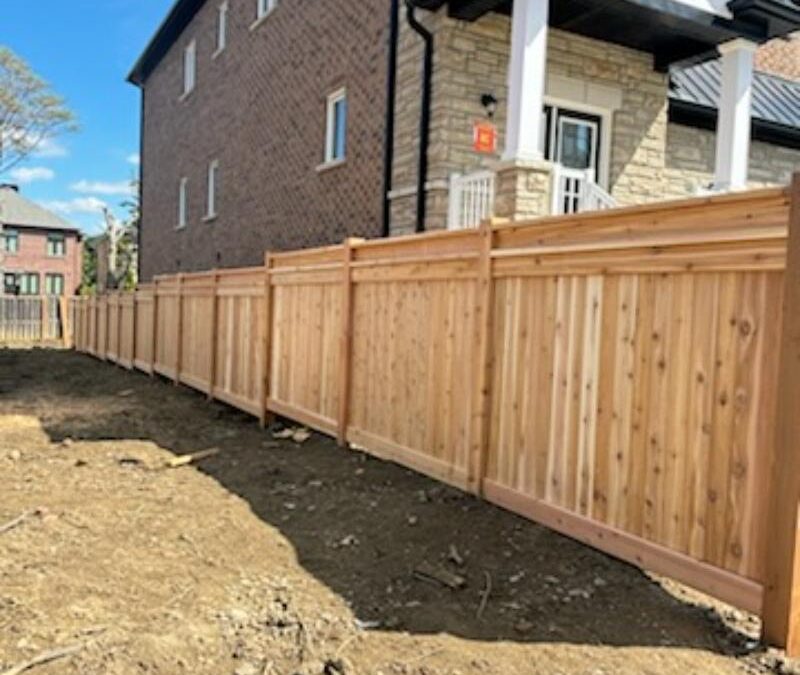
Wood fencing is chosen by many residential property owners across Ontario, though the decision process involves more variables than homeowners initially expect. As it turns out, upfront costs and long-term maintenance requirements can be dramatically affected by the type of wood, installation method, and local climate conditions. Questions about cedar versus pressure-treated lumber are asked frequently by property owners in Burlington and Hamilton; concerns about proper spacing and foundation preparation often get overlooked until installation day. Weather patterns and soil conditions typically determine the maintenance schedule for wood fences. Most homeowners find the natural aesthetic and customization options worth the ongoing care requirements, that said.
Wood fences are usually priced between $75-95 per linear foot when installed, depending on the wood type and height; cedar and pressure-treated pine are commonly chosen for Ontario properties. Annual staining or sealing is typically involved in maintenance, with proper installation ensuring 15-20 years of service life. Specific pricing and material recommendations can be provided by visiting a trusted local contractor’s website for reliable installation in Burlington or Hamilton.
Fast Facts:
- Cedar fences can last 15-20 years with proper maintenance; pressure-treated pine typically lasts 10-15 years
- Wood fence installation takes 1-3 days for typical residential projects in Burlington area
- Proper post spacing is 6-8 feet apart for standard residential wood fencing
FAQ:
Q: How long do wood fences typically last?
Look, this depends heavily on the wood type and maintenance schedule. Cedar fences are known for lasting 15-20 years when properly maintained; 10-15 years of service is usually provided by pressure-treated lumber. Weather exposure plays a big role too. The lifespan is extended significantly by regular staining.
Q – What’s the difference between cedar and pressure-treated wood?
Cedar is naturally resistant to insects and decay, making it a premium choice for Ontario’s climate. Rot and pests are resisted by pressure-treated lumber through chemical treatment, offering good value at a lower price point. Both options are commonly used in Burlington and Hamilton installations. Budget and aesthetic preferences often determine the choice.
Q: How often should I stain or seal my wood fence?
Fair point – this varies by exposure and wood type. Annual treatment benefits most wood fences, though some protected areas might stretch to every 18 months. Longer periods between treatments can sometimes be managed by cedar than pressure-treated options. Regular maintenance is made pretty important by weather conditions in southern Ontario. That still surprises people.
Choosing the Right Wood Type
Cedar stands out as the premium option for residential fence installation in Burlington and surrounding areas. Excellent resistance to insects and decay is provided by the natural oils in cedar, which matters quite a bit in Ontario’s variable climate. Solid performance at a more accessible price point is offered by pressure-treated pine; budget-conscious homeowners find it popular. Local suppliers readily stock both materials, and professional installation techniques work well with them. Over time, an attractive silver-gray patina is developed by cedar if left untreated; proper staining helps pressure-treated lumber maintain its original appearance longer.
Installation Considerations and Costs
Professional installation typically runs $75-95 per linear foot, depending on fence height and ground conditions. Setting posts in concrete footings is involved in the process; optimal stability requires spacing them 6-8 feet apart. Installation complexity can be affected by soil conditions in Hamilton and Mississauga, particularly in areas with heavy clay or rocky ground. Normal weather conditions allow most residential projects to be completed within 1-3 days. From what we’ve seen, a significant difference in long-term fence performance is made by proper installation, and maintenance headaches down the road are reduced.
Maintenance Requirements and Scheduling
Wood fences are protected from moisture damage and UV exposure by annual staining or sealing. Problems are caught early by regular inspection for loose boards or damaged posts. Anyway, that’s usually where most maintenance issues get resolved before they become expensive repairs.
Common Problems and Solutions
Natural occurrences with wood fencing include warping and splitting, particularly during the first year as lumber adjusts to local moisture levels. Expansion and contraction are allowed by proper spacing between boards; stress on the material is reduced. Cedar experiences less insect damage, but pressure-treated lumber can be affected if the protective coating is compromised. Premature rot is prevented by minimizing ground contact, which is why proper grading around fence posts is included in professional installation. Routine maintenance addresses most issues rather than major repairs.
Working with Professional Installers
Local soil conditions, permit requirements, and material suppliers in the Burlington area are understood by experienced fence contractors. Proper post setting, accurate measurements, and quality materials that meet manufacturer specifications are included in professional installation. Reliable workmanship and customer satisfaction throughout the project are ensured by the King Fence Promise. Options are compared and what’s included in different service packages is understood when homeowners get multiple quotes. For detailed information about wood fence installation and maintenance in your area, visit our website to connect with local fencing experts.
Recent Comments