
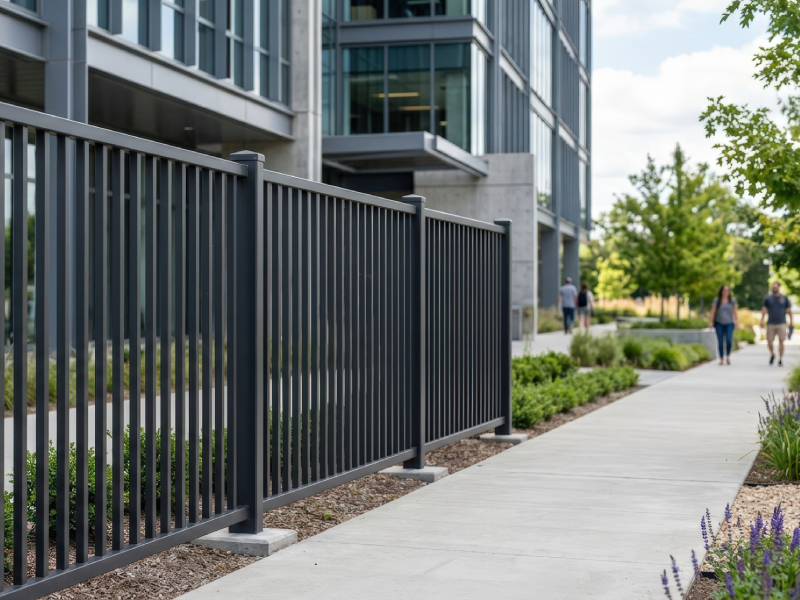
Commercial fencing for Burlington, Oakville, and Mississauga businesses typically ranges from $25-85 per linear foot, depending on material and height requirements. The best long-term value is usually offered by steel and aluminum options; chain-link remains popular for large perimeters due to cost efficiency. Compliance with local commercial building codes is ensured by professional installation and security benefits are maximized.
Fast Facts:
- Commercial fence installations in the GTA increased by 34% in 2023
- Steel fencing can last 25-30 years with minimal maintenance
- 6-8 foot minimum heights are required by most Burlington commercial properties
- Aluminum fencing costs roughly 15-20% more upfront but saves on long-term maintenance
- Chain-link with privacy slats remains the most budget-friendly option for large areas
Understanding Commercial Fencing Needs
Different security and aesthetic demands are faced by business properties than residential homes. Perimeter protection that can handle heavy equipment traffic is needed by a manufacturing facility in Burlington, while curb appeal alongside security might be prioritized by an office complex in Mississauga. Additional stress is put on materials by weather patterns across the region; freeze-thaw cycles, wind loads, and salt exposure from winter road treatments all take their toll. Professional installation becomes critical when valuable assets are being protected and employee safety is being ensured.
Steel Fencing: The Workhorse Option
The go-to choice for serious commercial applications remains steel, and for good reason. It’s built to withstand impacts that would damage other materials. A logistics company in Oakville recently upgraded from chain-link after repeated damage from delivery trucks; the steel fence has held up perfectly for three years running. Rust is resisted by galvanized steel, while color options and extra protection are added by powder coating. Installation costs run higher initially, but much longer replacement intervals are stretched than alternatives.
Aluminum: Low Maintenance Excellence
An interesting middle ground is offered by aluminum fencing. It won’t rust like untreated steel, yet substantial security is provided for most commercial needs. The material works particularly well for office parks and retail centers where appearance matters. Aluminum was chosen by a Burlington medical center specifically because zero ongoing maintenance was required; no painting, no rust treatment, just occasional cleaning. Plus, aluminum sections can be customized easily if property layouts change down the road.
Chain-Link: Budget-Friendly Perimeter Protection
Despite newer options, large commercial installations are still dominated by chain-link. The math usually works out when several acres are being fenced. Nearly $40,000 was saved by a distribution center in Mississauga by choosing chain-link over steel for their back perimeter, then those savings were invested in upgraded gates and access control. Privacy slats can be added later if needed. Ground settling is handled better by the material than rigid alternatives, which matters in areas with clay soil.
Vinyl and Composite Options
Commercial-grade vinyl has improved dramatically in recent years. It’s being used more frequently for office complexes and retail properties where aesthetics matter. Painting is never needed by the material and fading is resisted better than older formulations. However, vinyl can be made brittle by extreme cold; something to consider given Ontario winters. Excellent results were reported by a property management company in Hamilton with vinyl fencing around their office buildings, though steel was stuck with for their warehouse areas.
Planning Your Commercial Fence Project
Many material decisions are driven by site conditions, to be fair. Soil type, drainage, proximity to roads, and existing utilities all factor into the equation. These elements are assessed by professional contractors during initial consultations. Permit applications are also handled by them and compliance with local building codes is ensured. Specific requirements for commercial fencing height, setbacks, and materials are had by Burlington, Oakville, and Mississauga each. Costly corrections later are prevented by getting this right upfront.
Working with Professional Installers
Specialized equipment and expertise that goes beyond residential work is required by commercial fence installation. Professional attention is demanded by proper post setting, grade management, and gate installation. Years of experience working with businesses across the region is brought by King Fence, understanding both the technical requirements and timeline pressures that are faced by commercial projects. When you’re ready to secure your property with durable, professional-grade fencing; visit our website to discuss your specific needs and get a detailed project quote.
Mini-FAQ:
Q: What’s the most durable commercial fencing material? The crown for durability is taken by steel, especially galvanized or powder-coated options. Weather extremes are handled well and damage from equipment or vehicles is resisted. Aluminum runs a close second. That still surprises people.
Q: How long does commercial fence installation take? Most projects get completed within 3-7 business days, depending on perimeter size and material choice. Timelines can be extended by weather. Another week or two upfront is usually added by permit approval.
Q: Do I need permits for commercial fencing in Burlington? Fair point – yes, building permits are required by most commercial installations. Height restrictions, setback requirements, and zoning compliance all factor in. The paperwork should be handled by your contractor.
Q: What about maintenance requirements? Look, it varies significantly by material. Occasional touch-up painting is needed by steel, aluminum stays virtually maintenance-free, and periodic cleaning is just required by vinyl. Tension adjustments might be needed by chain-link over time.
Recent Comments