
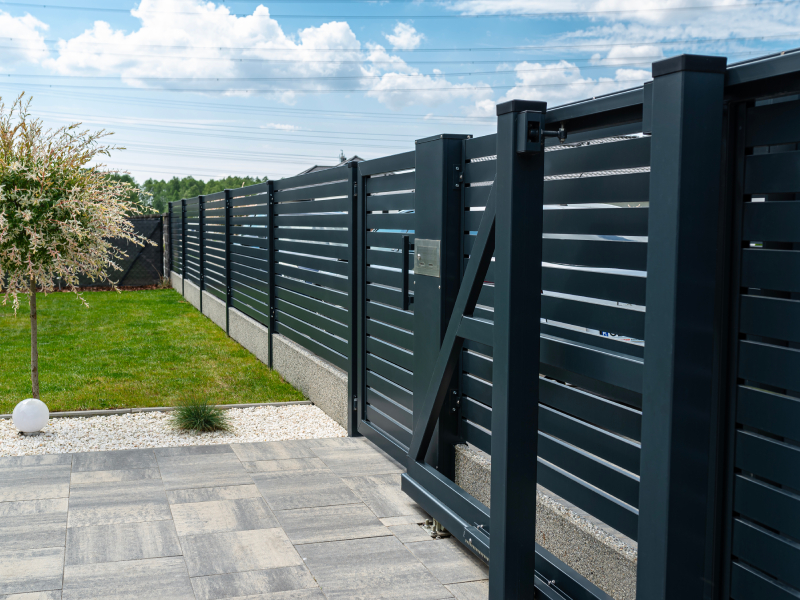
Horizontal slat designs, mixed-material combinations, and privacy screens with decorative elements are usually included in the top fence styles for 2026. Vinyl, composite, or treated wood options are often preferred by modern homeowners for their durability with minimal maintenance; security and curb appeal are typically enhanced by these styles while various architectural themes are accommodated.
Fast Facts:
- Horizontal slat fencing has increased in popularity by 40% since 2023
- Mixed-material designs (wood/metal combinations) are trending in Burlington and Hamilton neighborhoods
- Privacy fences with built-in planters or lighting features add 8-12% to property value
- Vinyl and composite materials can last 25-30 years with proper installation
- Most homeowners replace fencing every 15-20 years, depending on material choice
Horizontal Slat Designs Lead the Way
Contemporary looks are being sought by homeowners who have made horizontal fencing their go-to choice. Modern architecture is complemented well by the clean lines, but traditional homes are also enhanced when this is done right. Dozens of these have been installed by us in Hamilton and Burlington over the past year. Visual width is created by the style; smaller yards are made to appear larger. Precise spacing is required by installation to maintain the sleek appearance, and hidden fasteners are typically used to mount the boards for that seamless finish.
Mixed-Material Combinations Gain Traction
Visual interest is created by combining wood with metal accents or stone pillars without the landscape being overwhelmed. More frequent requests for these designs are being made in Oakville and Mississauga neighborhoods. Cedar or composite slats with aluminum frames are used in a popular approach. Depth is added by the contrast while durability is maintained. From what we’ve seen, single-material options tend to age less well than these combinations, partly because weathering occurs at different rates with different materials.
Privacy Screens with Decorative Elements
Basic board-on-board construction is being surpassed by modern privacy fencing. Built-in planters, integrated lighting, or geometric cutout patterns are being added by homeowners. Dual purposes are served by these features; privacy is maintained while architectural interest is added. Solid barriers seem to be moving away from the trend toward designs that filter views rather than blocking them completely. Decorative elements increase installation complexity, but the extra effort is usually justified by the results.
Sustainable Material Choices
Environmental concerns are influencing purchasing decisions as composite and recycled materials gain ground. More upfront costs are typically required by these options, but less maintenance is needed over time. Longevity makes vinyl remain popular, though the natural look of responsibly sourced wood is preferred by some homeowners. In many cases, initial investment must be balanced with long-term maintenance requirements. These materials are ensured to perform as expected when professional installation is used.
Color and Finish Trends
Current preferences are dominated by neutral tones, with charcoal, warm gray, and natural wood stains leading the way. Bright colors are becoming less common; they can clash with changing landscape designs. Finish quality matters more than ever; smooth, consistent surfaces that resist fading and weathering are expected by homeowners. Appearance is helped to maintain over time by powder-coated metals and UV-resistant stains. Manufacturing or experienced contractors typically apply these finishes.
Height and Configuration Options
Privacy fencing standards remain at six-foot heights, but varied heights within the same installation are being requested more often. Property contours can be followed by stepping down fence sections, or visual interest can be created. Lower sections for garden areas are incorporated by some designs with taller sections for true privacy zones. Up to six feet are typically allowed by local regulations in Burlington and Hamilton without special permits. I suppose neighboring properties and intended use often determine the configuration.
Installation Considerations and Professional Expertise
The difference between a fence that lasts decades and one requiring frequent repairs is made by proper installation. Longevity is affected by ground conditions, drainage, and post spacing. Too many DIY projects have been seen by us that looked good initially but failed within a few years. Proper concrete footings, appropriate hardware, and attention to local building codes are included in professional installation. Getting it right the first time is meant by the King Fence Promise. Expert guidance on your fencing project can be explored by visiting our website to review your options.
Mini-FAQ:
Q: What’s the most popular fence style for 2026? Horizontal slat designs are leading the trend. Their clean, contemporary look is being chosen because it works with both modern and traditional homes. Plus, maintenance is relatively easy.
Q: Which materials last longest in Ontario weather? Freeze-thaw cycles are handled better by vinyl and composite materials than most options. Wood fencing can be durable too, but regular staining or sealing is required. Metal options like aluminum are also gaining ground.
Q: How much does a modern fence typically cost? Fair point – costs are varied widely by material and height. Basic vinyl runs roughly $25-35 per linear foot when installed, while $45-60 per foot can be reached by premium composite or mixed-material designs.
Q: Do I need permits for fence installation in Burlington? Permits are required by most residential fencing projects if they’re over 6 feet tall or located near property lines. Local building departments should be checked first.
Recent Comments