
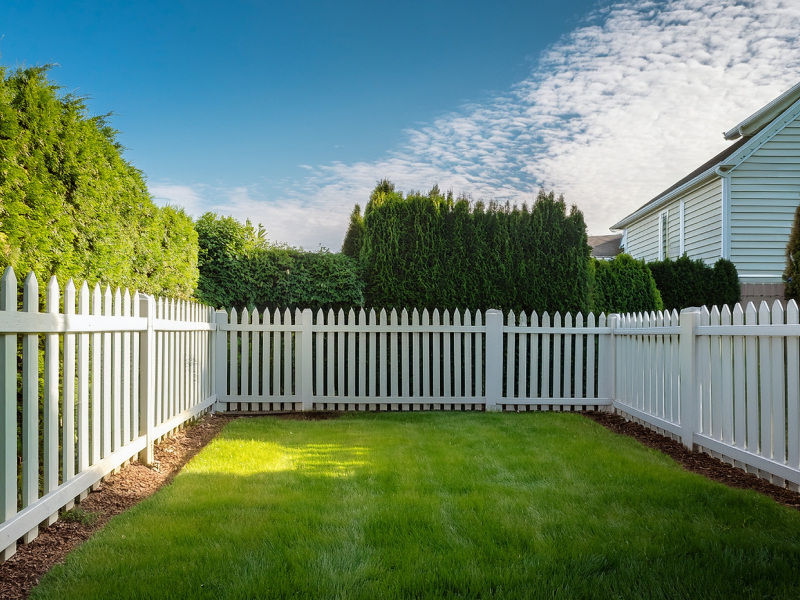
Chain link fencing is usually priced at $8-15 per linear foot installed, while wood ranges from $15-30 and vinyl from $20-50 per foot. Installation complexity, soil conditions, and local permit requirements can significantly impact final pricing; many Burlington homeowners find the total project cost runs 20-40% higher than initial material estimates were suggesting.
Fast Facts:
- Chain link offers the lowest upfront cost at $8-15 per linear foot installed
- Wood fencing averages $15-30 per foot depending on cedar, pine, or pressure-treated options
- Vinyl fencing ranges $20-50 per foot but requires minimal long-term maintenance
- Installation labor typically adds $5-12 per linear foot to material costs
- Permit fees in Burlington and Hamilton range from $50-200 for most residential projects
Understanding Base Material Costs
Materials alone for chain link fencing start around $3-8 per linear foot, making it the most economical choice for property owners in Burlington and Oakville. Rust is resisted by the galvanized steel construction, which provides decades of reliable service. Wood materials range from $8-20 per foot depending on species and grade. Cedar costs more upfront but naturally resists insects and decay. Vinyl materials typically run $12-25 per foot before installation; premium styles with decorative caps or lattice work can push higher. Interesting how the price gaps narrow when you factor in longevity.
Installation Labor and Hidden Expenses
Substantial cost is added to any fencing project by professional installation, I suppose. Labor rates in the Hamilton and Mississauga areas generally run $5-12 per linear foot, depending on soil conditions and access challenges. Specialized equipment for post holes is required by rocky terrain common in Grimsby. Utility marking services are mandatory but free through Ontario One Call. Permit applications in most municipalities cost $50-200, though some areas waive fees for basic residential projects. Initial budgets often overlook these expenses.
Long-Term Maintenance Considerations
Minimal ongoing care is required by chain link beyond occasional cleaning and gate adjustments. The most hassle-free ownership experience is offered by vinyl fencing, needing only periodic washing with soap and water. Regular attention is demanded by wood fencing to maintain appearance and structural integrity. Moisture damage is prevented and lifespan extended by staining or sealing every 2-3 years. A property manager in Burlington recently mentioned spending $800 annually on wood fence maintenance for a modest commercial lot. Guidance on proper care techniques for all materials is included in the King Fence Promise.
Comparing Total Cost of Ownership
Just part of the financial equation is represented by initial installation. Chain link fencing typically provides 15-25 years of service with minimal intervention. Wood fencing can last 20-30 years with proper maintenance but ongoing investment in treatments and repairs is required. Twenty to thirty year warranties are often carried by vinyl fencing, which eliminates most maintenance expenses. Over a 20-year period, the total cost difference between materials narrows considerably when maintenance is factored in, to be fair.
Regional Pricing Variations
Pricing across the Greater Hamilton Area is affected by local market conditions. Premium rates are often charged by Burlington contractors due to higher demand for residential fence installation services. Oakville and Mississauga pricing tends to be competitive given the larger contractor base. More budget-friendly options are typically offered by Grimsby and Hamilton, particularly for straightforward installations. Costs are also impacted by seasonal timing, with spring and early summer commanding higher rates.
Making the Right Choice for Your Property
Initial material selection is often driven by budget constraints, but long-term value deserves consideration. Chain link works well for security-focused applications like commercial properties or large residential perimeters. Traditional aesthetics that complement most architectural styles are provided by wood fencing. The best balance of appearance and low maintenance for homeowners seeking durable, customizable solutions is offered by vinyl. Proper techniques and warranty protection are ensured by professional installation regardless of material choice.
Getting Accurate Project Estimates
On-site evaluation of specific conditions and requirements is required by reliable cost estimates. Final pricing is influenced by soil type, slope, existing structures, and access limitations. Detailed written estimates breaking down materials, labor, and additional expenses are provided by most reputable contractors. Corner posts, gates, and any special features like privacy slats or decorative elements should be included in the measurement process. For professional guidance on your fencing project, visit our website to connect with King Fence’s experienced installation team.
Mini-FAQ:
Q: What’s the cheapest fencing option for large properties? Chain link is consistently offered as the most budget-friendly solution for extensive perimeters. Installation costs stay relatively low since posts are spaced wider apart. That said, aesthetic preferences might push you toward other materials.
Q: How much does wood fencing maintenance cost annually? Look, wood fencing typically needs staining or sealing every 2-3 years at roughly $2-4 per linear foot. Weather exposure in Ontario can be harsh. Repairs for loose boards or rotted posts add another $100-300 annually for average-sized yards.
Q: What factors increase fence installation costs the most? Sloped terrain, rocky soil, and utility line markings can double labor expenses. Corner posts are required to have additional bracing. Funny enough, the permit process often takes longer than the actual installation. That still surprises people.
Q: Does vinyl fencing justify the higher upfront cost? Fair point to consider long-term value. Vinyl eliminates painting, staining, and most repairs over 20-30 years. The material is manufactured to withstand Ontario winters without cracking or warping.
Recent Comments